Repair.org, the repair industry trade association, announced the 2026 Worst in Show awards today, annual anti-awards that spotlight the most harmful, invasive, wasteful, and unfixable tech on display at CES.
Worst in Show is produced by the Right to Repair organization Repair.org with support from a coalition of consumer and tech advocacy organizations. The awards are hosted this year by Simone Giertz, the inventor, maker, and YouTuber known for building delightfully impractical robots and poking fun at tech hype.
This year’s winners include: an “open sesame” refrigerator that puts complexity (and ads) between you and your leftovers, a doorbell ecosystem expanding surveillance in all directions, a smart treadmill that shrugs at basic security assurances, a disposable electronic lollipop (yes, really), and two Bosch products that turn everyday convenience into subscription bait and lock-in. Voting for People’s Choice is still underway, and the People’s Choice award will be presented by Back Market and NowThis Editor-in-Chief Michael Vito Valentino.
Presented by Cindy Cohn, Executive Director, Electronic Frontier Foundation (EFF)
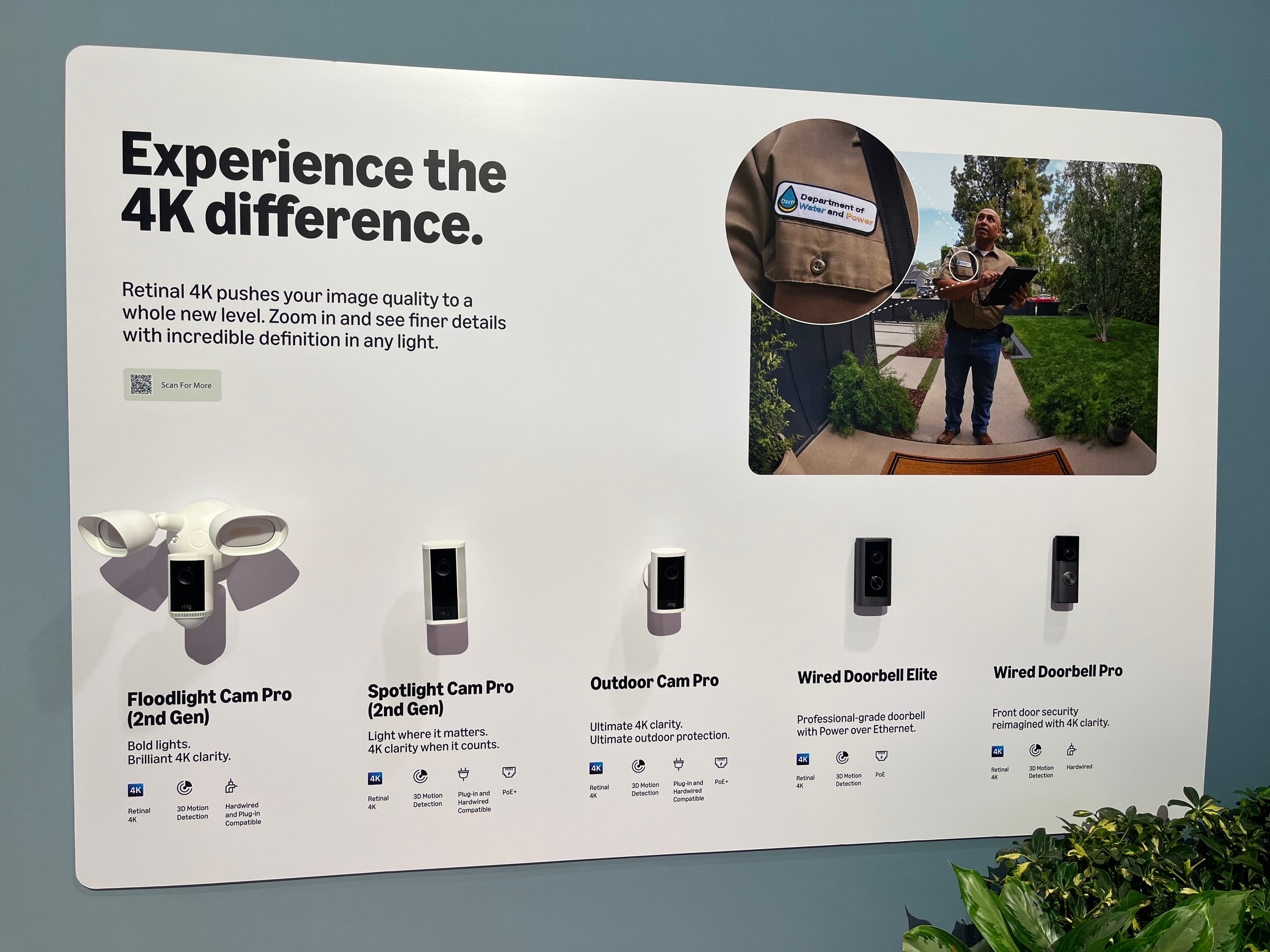
Cindy Cohn awarded Worst in Show for Privacy to Amazon Ring AI for expanding the reach and ambition of consumer surveillance, through new AI features debuting on their cameras and doorbells. EFF cited a growing menu of capabilities including facial recognition, deployable mobile surveillance towers, and an app ecosystem that could invite even more invasive third-party features.
As Cohn put it, this kind of expansion reinforces the idea that “more surveillance always makes us safer,” even as consumers are left with bigger questions about where the data goes and how it is used.
Presented by Paul Roberts, Founder, Securepairs and President, Secure Resilient Future Foundation
Paul Roberts awarded Worst in Show for Security to Merach for its connected home treadmill line featuring a conversational AI coach. Roberts emphasized that internet connectivity, sensors, and large language model features raise the stakes when devices collect sensitive data, including biometrics and behavioral inferences. What pushed Merach over the line was the company’s own admission in its privacy policy: “We cannot guarantee the security of your personal information.” For products designed to live on home networks and gather high-value data, Roberts argued that this is not an acceptable baseline.
Presented by Nathan Proctor, Senior Director, Campaign for Right to Repair, PIRG
Nathan Proctor awarded Worst in Show for Environmental Impact to Lollipop Star, a candy lollipop with built-in electronics that transmits sound through jaw vibrations, marketed as “Music you can taste.” Proctor contrasted CES’s constant flood of disposable battery gadgets with the very real hazards those batteries create in the waste stream, including thousands of fires at U.S. waste facilities each year.
The product is both non-rechargeable and single-use, turning a moment of novelty into yet another hard-to-handle piece of e-waste.
Presented by Kyle Wiens, Co-Founder, iFixit
Kyle Wiens awarded Worst in Show for Repairability to Samsung’s AI-powered Family Hub refrigerator, citing an overengineered design that adds failure points without delivering meaningful durability or serviceability. Voice-controlled door operation, a large embedded touchscreen, and a poor track record supporting their increasing software dependence all raise the likelihood that a basic kitchen appliance becomes an unreliable service problem. Wiens summarized the concern bluntly: “I would not trust a Samsung fridge farther than I could throw it.”