Do Spiders Dream? Scientists Discover Their Sleep Is Strangely Similar to Ours
🌀 Reality-Breaking

“New experiments have identified REM-like sleep patterns in spiders. The findings also suggest that these arachnids possess a surprising need to recover lost sleep.”
Why It's Weird
The pursuit of scientific understanding leads researchers down some truly unexpected paths. This solid weirdness score indicates a story that's genuinely outside the realm of normal experience.
Read the full oddity in the app
Oddly Enough on the web is for discovery. Open the iPhone app for the complete story, offline saves, and your personalised feed.
Get Oddly Enough for iPhoneFull articles are available in the app.
Get Oddly Enough on iOS
Your daily dose of the world's weirdest, most wonderful news. Original articles, 100% autonomous.
Download on the App StoreYou might also like 👀

A spider named for Stephen Colbert has a genome about 50% larger than ours
Researchers at the University of California, Davis, have discovered that the trapdoor spider Aptostichus stephencolberti possesses a genome significantly larger than that of a human. The spider, which is roughly the size of a quarter, is named after the television host Stephen Colbert.

Earwax is both slippery and sticky—this weird combo might lead to safer insect repellents
Scientists are investigating the unique physical properties of earwax, which acts as both a lubricant and a sticky binder, for potential use in insect repellents.
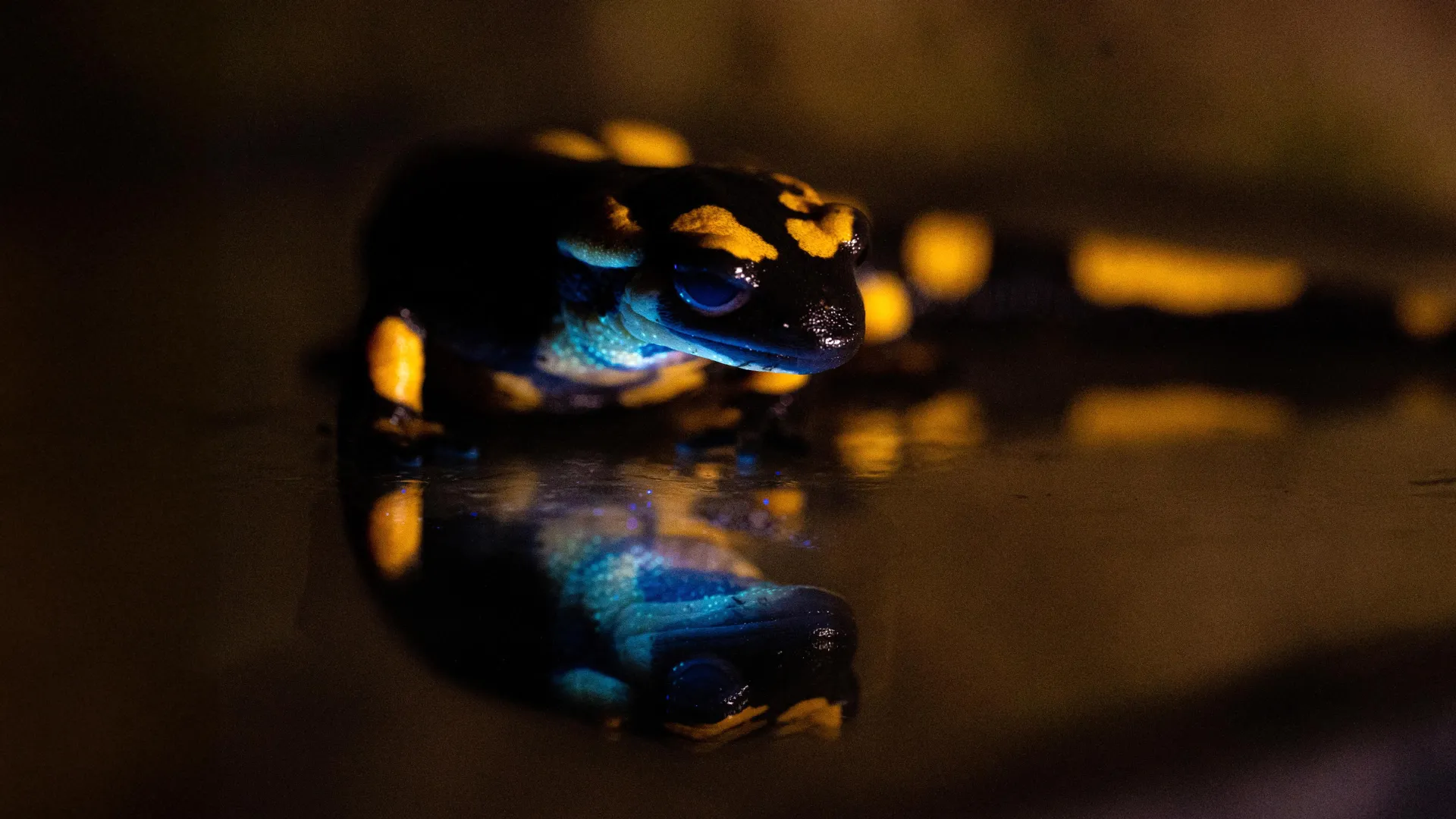
Scientists discover a secret glow in toxic fire salamanders
European black-and-yellow fire salamanders have been found to glow green and cyan under ultraviolet light. This mysterious fluorescence originates from their skin glands and toxic secretions, persisting for over 24 hours after being released.

Did asteroid impact help ants conquer the world?
Scientists suggest that the asteroid impact that killed the dinosaurs may have triggered bursts of 'jumping genes' in ant DNA, potentially aiding their global dominance and communication skills.