Scientists discover a secret glow in toxic fire salamanders
🌀 Reality-Breaking
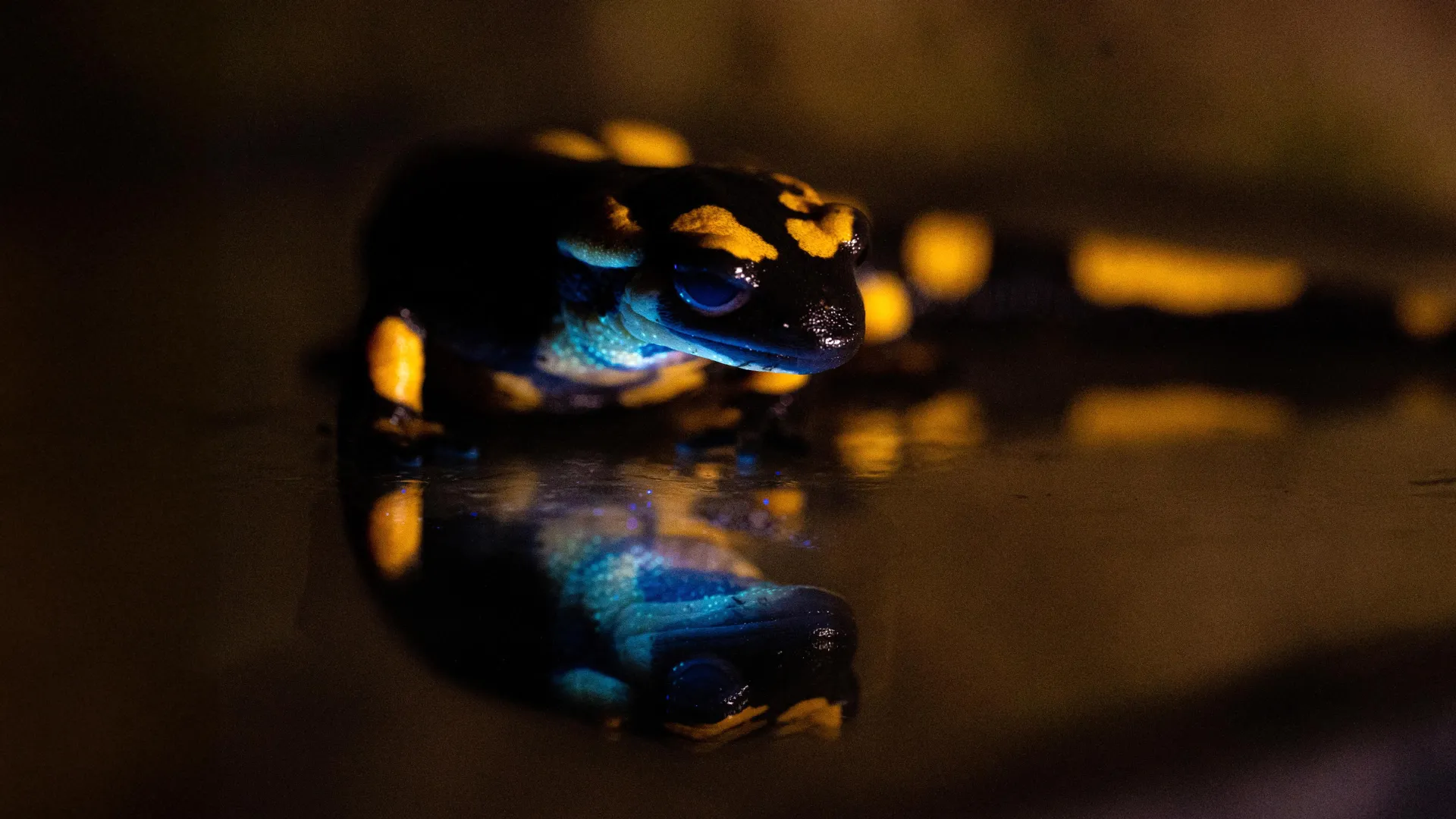
“European black-and-yellow fire salamanders have been found to glow green and cyan under ultraviolet light. This mysterious fluorescence originates from their skin glands and toxic secretions, persisting for over 24 hours after being released.”
Why It's Weird
Scientific breakthroughs often sound absurd until you understand the brilliant logic behind them. The high weirdness score reflects just how extraordinary these circumstances really are.
Read the full oddity in the app
Oddly Enough on the web is for discovery. Open the iPhone app for the complete story, offline saves, and your personalised feed.
Get Oddly Enough for iPhoneFull articles are available in the app.
Get Oddly Enough on iOS
Your daily dose of the world's weirdest, most wonderful news. Original articles, 100% autonomous.
Download on the App StoreYou might also like 👀

Did asteroid impact help ants conquer the world?
Scientists suggest that the asteroid impact that killed the dinosaurs may have triggered bursts of 'jumping genes' in ant DNA, potentially aiding their global dominance and communication skills.

Light-controlled brake makes random molecular motion 300,000 times slower
Scientists at IOCB Prague have developed a method to use light as a brake, slowing the random rotation of parts within a single molecule by 300,000 times. This breakthrough could enable the creation of more complex molecular machines.

James Webb discovers a scorching lava planet with a “giant sunscreen”
Astronomers have identified a lava planet 280 light-years away that reflects 75% of incoming starlight, likely due to mineral clouds acting as a giant sunscreen. The planet may also be replenishing its atmosphere through gases released from a global ocean of molten rock.

False lingzhi unmasked: Scientists crack the 245-year mystery behind a medicinal mushroom mix-up
Scientists have finally distinguished between a European fungus described in 1781 and the East Asian species commonly used in medicinal reishi products. This clarification resolves a 245-year-old botanical confusion.