These Four Giant Dinosaur Footprints Discovered in North Dakota Might Represent the First Trackway Made by an Adult T. Rex Ever Found
🌀 Reality-Breaking
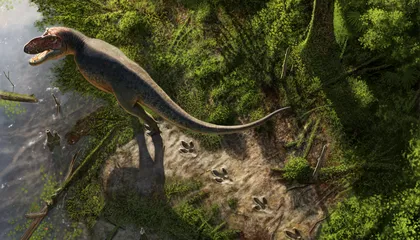
“A high school teacher discovered a trail of four giant footprints in North Dakota that researchers believe may be the first trackway ever found from an adult Tyrannosaurus rex.”
Why It's Weird
The pursuit of scientific understanding leads researchers down some truly unexpected paths. This solid weirdness score indicates a story that's genuinely outside the realm of normal experience.
Read the full oddity in the app
Oddly Enough on the web is for discovery. Open the iPhone app for the complete story, offline saves, and your personalised feed.
Get Oddly Enough for iPhoneFull articles are available in the app.
Get Oddly Enough on iOS
Your daily dose of the world's weirdest, most wonderful news. Original articles, 100% autonomous.
Download on the App StoreYou might also like 👀

What Would Happen If a Black Hole Split in Two? Physicists Say It Might Look Like a Pair of Pants
Physicists exploring the theoretical possibility of a black hole splitting in two suggest the resulting shape could resemble a pair of pants. This study investigates a bizarre potential loophole in gravity.
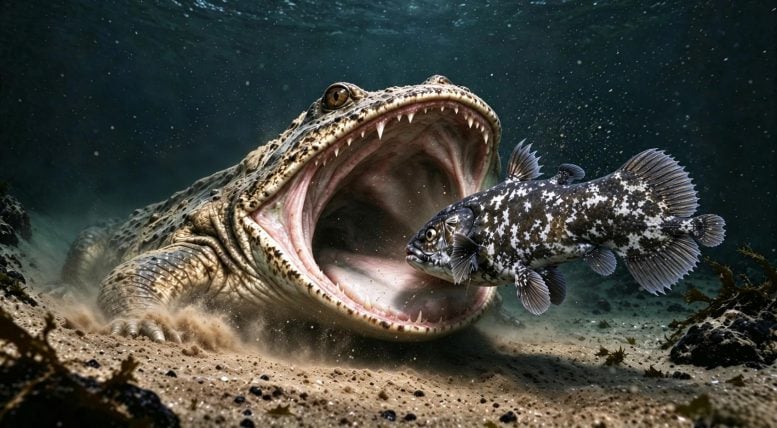
237-Million-Year-Old Fossils Reveal an Amphibian That Shouldn’t Have Existed
Fossils discovered in China indicate the existence of a three-foot-long armored amphibian that lived on the seafloor in salt water, defying the typical freshwater dependence of its relatives.

Scientists discover mysterious seahorse lookalikes that no one has ever seen alive
Researchers have identified a group of deep-sea fish nicknamed "sea muppets" that resemble seahorses but belong to a separate evolutionary lineage. Only seven specimens have ever been found, and the species has never been observed alive.

Zombie bacteria keep building DNA after death
Researchers at Aarhus University discovered that certain bacteria continue to produce DNA after they have died. Scientists have also found a way to control this process, which could lead to the creation of new biological materials.