Share on XShare on RedditCopy ArticleAdd us on The past was full of misery. Workers were stuck doing things that no one realized would kill them all, and when people did realize it, few of them really cared.
The past was full of misery. Workers were stuck doing things that no one realized would kill them all, and when people did realize it, few of them really cared.
But let’s turn away from the most obviously wretched jobs at the worker-smashing factory and shift our thoughts to more whimsical occupations, the kind you’d more enjoy picturing in an idealized view of the past. Perhaps these workplaces were a rare exception and would make for a fun setting in that period romance novel you’re writing?
But let’s turn away from the most obviously wretched jobs at the worker-smashing factory and shift our thoughts to more whimsical occupations, the kind you’d more enjoy picturing in an idealized view of the past. Perhaps these workplaces were a rare exception and would make for a fun setting in that period romance novel you’re writing?
Perhaps not. Many offered their own deadly and utterly unique dangers.
Perhaps not. Many offered their own deadly and utterly unique dangers.
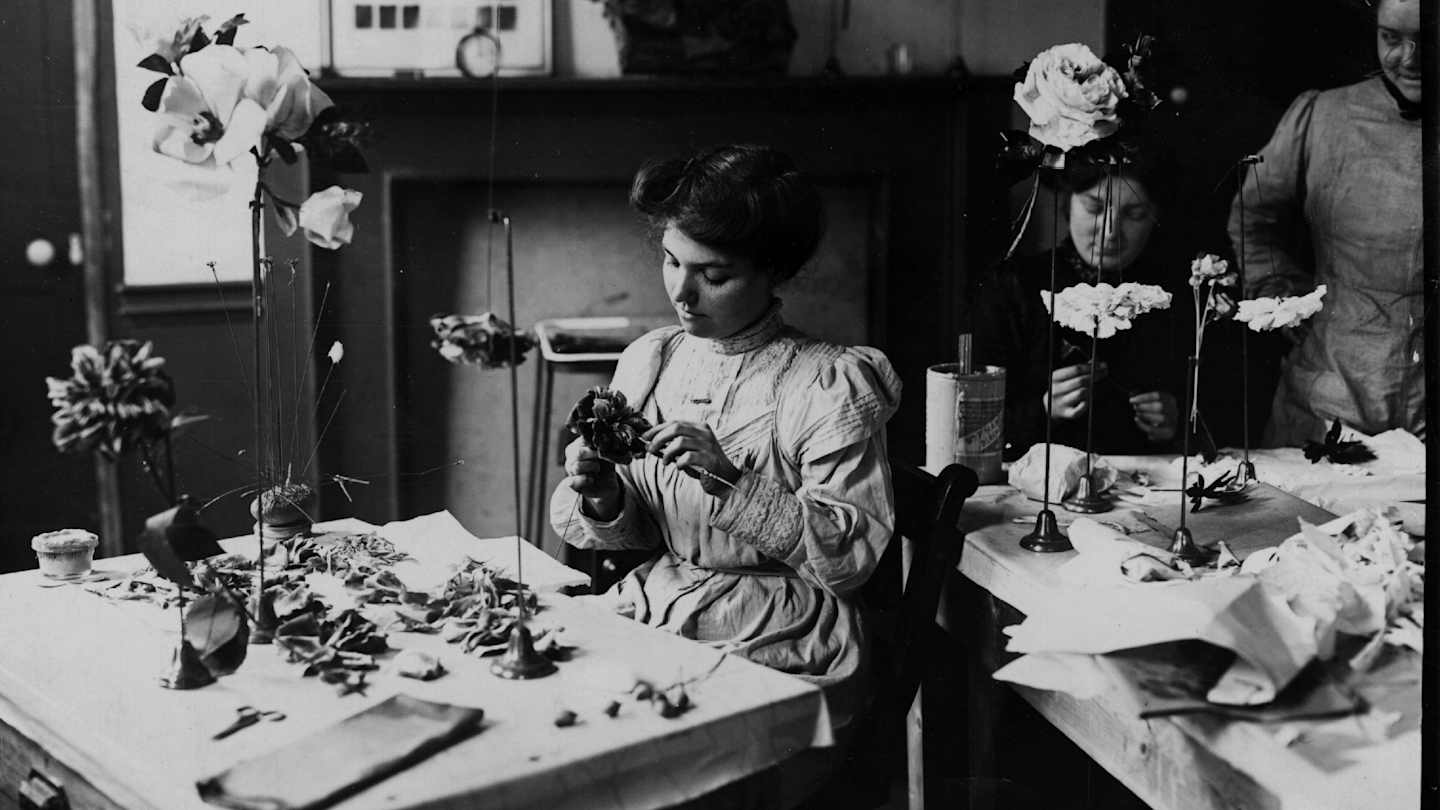
Victorian England had a large industry devoted to making artificial flowers. The process involved sewing fabric together for 12 or 18 hours a day, and perhaps you won’t be surprised that these factories operated like sweatshops. But the process also offered a special threat in the form of the dye used to color the artificial leaves green.
Victorian England had a large industry devoted to making artificial flowers. The process involved sewing fabric together for 12 or 18 hours a day, and perhaps you won’t be surprised that these factories operated like sweatshops. But the process also offered a special threat in the form of the dye used to color the artificial leaves green.
This dye was named Scheele’s Green, after its creator Carl Wilhelm Scheele. He stumbled on the process for creating it by accident, as happens with so many pigments, and it involved mixing sodium carbonate, arsenious oxide, and copper sulfate. The resulting dye contained arsenic. Many people who touched the final products, such as people whose homes used green wallpaper, became poisoned, while the most severe poisoning hit the women who used Scheele’s Green daily to color artificial leaves.
This dye was named Scheele’s Green, after its creator Carl Wilhelm Scheele. He stumbled on the process for creating it by accident, as happens with so many pigments, and it involved mixing sodium carbonate, arsenious oxide, and copper sulfate. The resulting dye contained arsenic. Many people who touched the final products, such as people whose homes used green wallpaper, became poisoned, while the most severe poisoning hit the women who used Scheele’s Green daily to color artificial leaves.
One account tells of a flower maker killed in 1861 with arsenic in her liver and lungs. The whites of her eyes had turned green, and she said everything looked green to her. It was a terrible way to dye.