Copy link
X
Share this article
3
Join the conversation
Follow us
Add us as a preferred source on Google
Newsletter
Live Science
Get the Live Science Newsletter
Get the world’s most fascinating discoveries delivered straight to your inbox.
Unlock instant access to exclusive member features.
By submitting your information you agree to the Terms & Conditions and Privacy Policy and are aged 16 or over.
You are now subscribed
Delivered Daily
Daily Newsletter
Sign up for the latest discoveries, groundbreaking research and fascinating breakthroughs that impact you and the wider world direct to your inbox.
Once a week
Life's Little Mysteries
Feed your curiosity with an exclusive mystery every week, solved with science and delivered direct to your inbox before it's seen anywhere else.
Once a week
How It Works
Sign up to our free science & technology newsletter for your weekly fix of fascinating articles, quick quizzes, amazing images, and more
Delivered daily
Space.com Newsletter
Breaking space news, the latest updates on rocket launches, skywatching events and more!
Once a month
Watch This Space
Sign up to our monthly entertainment newsletter to keep up with all our coverage of the latest sci-fi and space movies, tv shows, games and books.
Once a week
Night Sky This Week
Discover this week's must-see night sky events, moon phases, and stunning astrophotos. Sign up for our skywatching newsletter and explore the universe with us!
Get full access to premium articles, exclusive features and a growing list of member rewards.
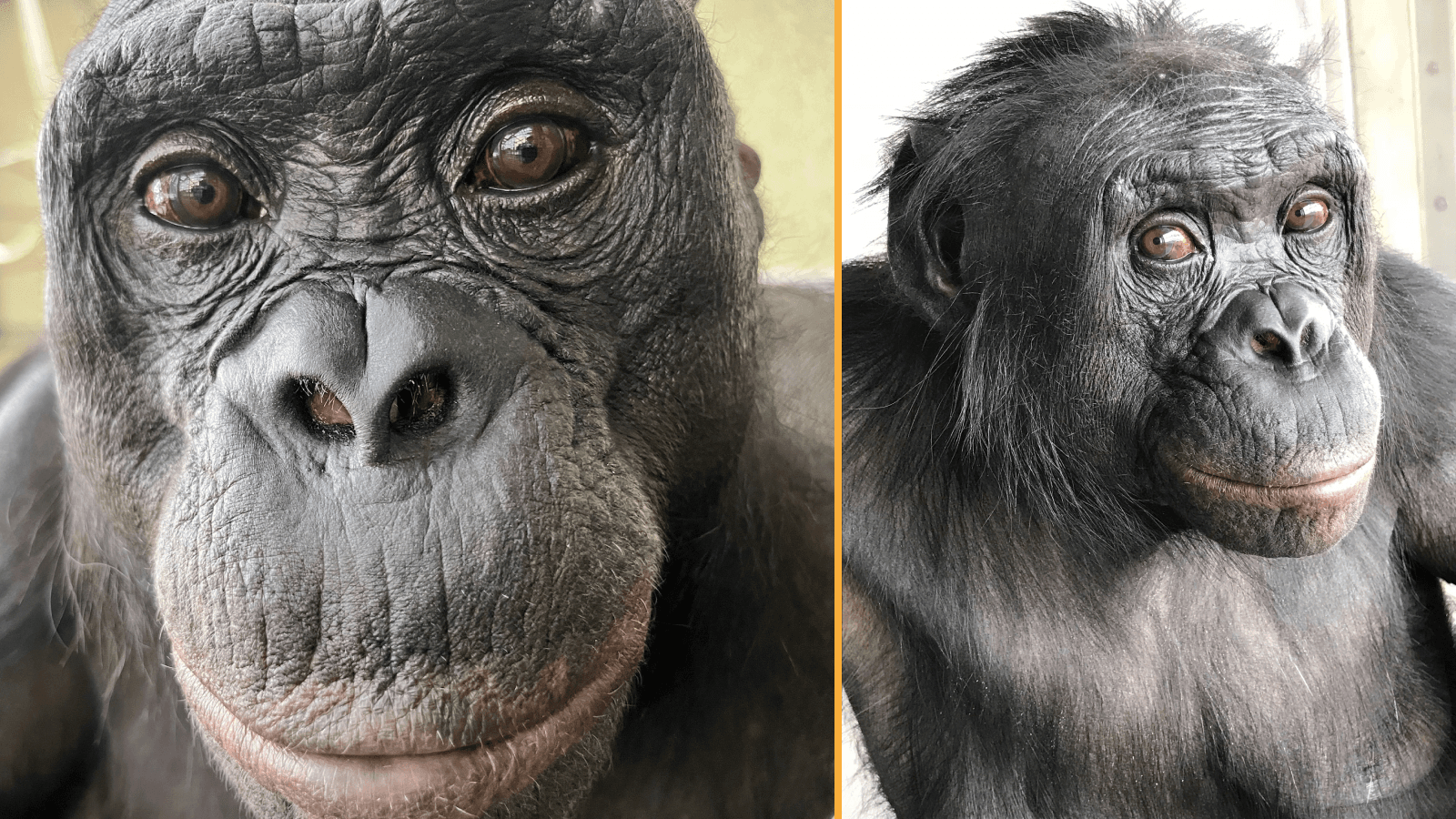
For the first time, scientists have experimentally shown bonobos (Pan paniscus), our closest living relatives along with chimpanzees (Pan troglodytes), can engage in pretend play — something previously assumed to be unique to humans.
Just like 2-year-old children can, Kanzi, a unique bonobo who could understand English, kept track of imaginary juice and grapes during pretend tea parties, according to a study published Thursday (Feb. 5) in the journal Science.
Although Kanzi, who died in March 2025, did not initiate the pretend play, his ability to follow along shows he had some of the mental building blocks needed to imagine pretend objects and scenarios.
"We were really in awe at this finding," study co-author Christopher Krupenye, an assistant professor of psychological and brain sciences at Johns Hopkins University, told Live Science. "What we're seeing in this case is that … something that seems to be fundamentally human and is emerging early in our human development is also shared with our closest relatives," he said.
This suggests the human capacity to imagine objects that aren't really there could have evolved before humans and bonobos split from our last common ancestor over 6 million years ago, Krupenye said.
Previous anecdotal evidence has hinted that captive and wild great apes engage in pretend play. For example, a wild 3-year-old chimpanzee in Guinea was observed playing with a discarded human-made leaf cushion by placing it on his head. A captive bonobo also "picked" and "ate" blueberries from a photograph of real blueberries.