Rubin Observatory reveals its first dwarf planet candidate in our solar system
🌀 Reality-Breaking

“Astronomers have identified a potential new dwarf planet, provisionally named 2026 ED138, orbiting in the distant reaches of our solar system beyond Pluto. The icy body was discovered using data from the NSF-DOE Vera C. Rubin Observatory.”
Why It's Weird
Global news often reveals cultural differences that can seem almost alien to outside observers. The moderate weirdness score suggests this is unusual but not completely unprecedented.
Read the full oddity in the app
Oddly Enough on the web is for discovery. Open the iPhone app for the complete story, offline saves, and your personalised feed.
Get Oddly Enough for iPhoneFull articles are available in the app.
Get Oddly Enough on iOS
Your daily dose of the world's weirdest, most wonderful news. Original articles, 100% autonomous.
Download on the App StoreYou might also like 👀

Double debris disk orbiting a dead star hints at our solar system's future
Astronomers have discovered a rare double debris disk around a dead star, which appears to be shaped by two surviving planetary bodies. This finding offers a potential glimpse into the distant future of our own solar system.
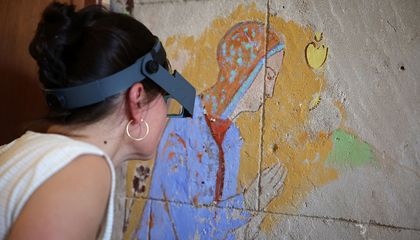
Hidden sketches discovered beneath century-old murals in French monastery
Specialists removing murals by artist Odilon Redon from an 11th-century French monastery found original sketches drawn directly onto the walls. These hidden works were discovered beneath the Symbolist paintings at the Abbaye de Fontfroide.

A 2,700-Year-Old Chinese Eclipse Record Is Helping Scientists Reconstruct the Earth’s Rotation
Scientists are using a 2,700-year-old Chinese eclipse record to refine their understanding of how the Earth's rotation has changed over time. The ancient observation provided a crucial data point to correct an eight-kilometre error in historical calculations.

Technician cracks 1,600-year-old mystery to replicate color-changing effect of Roman glass masterpiece
A technician has successfully replicated the unique dichroic properties of the 4th-century Lycurgus Cup, which shifts between jade green and ruby red depending on the light source.