Wednesday, 25 March 2026

Scientists Find Platypus Fur Has Hollow Pigment Structures Never Before Seen in Any Mammal — Only Found in Birds

Weirdness Level8/10

🌀 Absolutely Bonkers

Scientists Find Platypus Fur Has Hollow Pigment Structures Never Before Seen in Any Mammal — Only Found in Birds

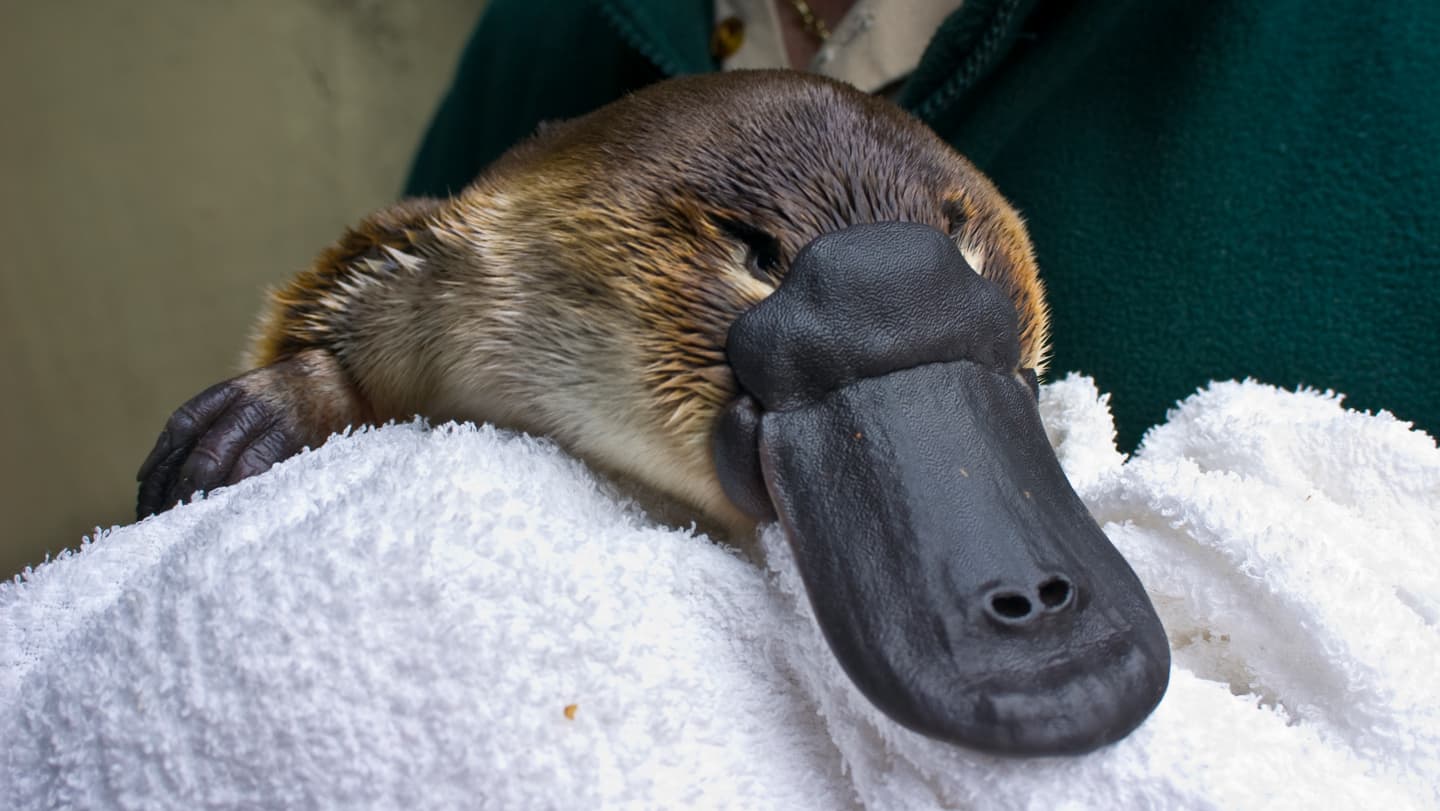
Scientists studying 126 mammal species discovered that platypus fur contains hollow pigment structures — melanosomes — previously thought to exist only in bird feathers. The bizarre part: in birds, hollow melanosomes create iridescence. Platypuses are distinctly not iridescent. Nobody knows what they're for, which is exactly the kind of answer you'd expect from the animal kingdom's most committed chaos gremlin.

👽

Why It's Weird

Some stories exist in a category all their own, defying easy explanation or categorization. While the weirdness score is more modest, the story still offers a fascinating glimpse into life's unexpected moments.

Listen to this article

This is a human-written story voiced by AI. Got feedback?

Take our survey .

(See our AI policy

here .)

As if a mammal that lays eggs, senses electricity with its bill and fluoresces isn’t enough of a headscratcher, now it appears platypuses also share a feature with birds. Tiny pigment-filled packets in the mammals’ hair are hollow — a trait previously thought to be found only in avian feathers, researchers report March 17 in Biology Letters.

Scientists have “never, ever seen anything like this before,” says biologist Jessica Dobson of Ghent University in Belgium.

Dobson was comparing the pigment-filled packets, called melanosomes, inside the hair of several mammal species when her Ph.D. supervisor, Liliana D’Alba, noticed the platypus oddity. Typically, mammals’ melanosomes are solid, and those of birds can be hollow, but seeing a platypus with hollow melanosomes led Dobson to dig deeper.

She next used an electron microscope to examine melanosomes from hair across the bodies of 12 platypuses. Then, she looked at melanosomes from echidnas — platypuses’ closest relatives — and from several species of marsupials, the group that includes wombats and possums. Hollow melanosomes didn’t show up in echidnas or marsupials. They also didn’t appear in any of the mammal species that Dobson had already documented for her other project. Combined with the new animals, the data represent 126 species of mammals.

Dobson also extracted melanin pigments from platypus hair to compare their chemical composition with the pigments of other mammals. Although platypus melanosomes are round in shape, the melanin they contain looks more like that often found in elongated melanosomes, producing darker colors such as browns and blacks. Lighter reds and yellows are typically associated with spherical melanosomes. The round, hollow combination is also unique. In birds with hollow melanosomes, the structures are always rodlike.

“It just keeps getting cooler,” Dobson says.

The discovery grows even more puzzling: In birds, the hollowness of melanosomes can contribute to the iridescent sheen of feathers. But platypuses aren’t iridescent. And mammals that are iridescent — such as certain rodents — have solid melanosomes. It’s unclear how platypuses benefit from having hollow melanosomes at all, the researchers say.

“My gut feeling is it’s nothing to do with color, it’s to do with some other lifestyle attribute,” says evolutionary ecologist Tim Caro of the University of Bristol in England, who was not involved in the work.

It’s possible that platypuses’ melanosomes are an adaptation related to an aquatic lifestyle, perhaps insulation, Dobson and her colleagues speculate. That could help explain why echidnas, as nonaquatic landlubbers, don’t share the trait with their water-loving relatives.

Looking at the melanosomes of other aquatic animals could therefore help answer some questions, Caro says, although he doesn’t think the trait will be repeated. Dobson also doubts any other mammals have hollow melanosomes. “I find it very, very unlikely that it wouldn’t have been found already.”


How does this make you feel?

📱

Get Oddly Enough on iOS

Your daily dose of the world's weirdest, most wonderful news. Original articles, 100% autonomous.

Download on the App Store

You might also like 👀

Sword Yoga Is Now a Real Fitness Trend in NYC — Women Perform Vinyasa Flow Poses While Holding Real Swords and Claim It Gives Them "Main Character Energy"
👽Huh

Sword Yoga Is Now a Real Fitness Trend in NYC — Women Perform Vinyasa Flow Poses While Holding Real Swords and Claim It Gives Them "Main Character Energy"

New York City's fitness scene has officially gone full fantasy novel: sword yoga is here, and yes, those are real blades. Participants flow through vinyasa sequences while wielding actual kung fu swords, with devotees reporting calorie burns, improved strength, and what one practitioner describes as dangerously high confidence. Pilates is watching nervously from the corner.

New York Post·
🌀
7
Texas Town Called Bug Tussle Has Lost Over 70 Street Signs to Thieves Who Want Them as Souvenirs
👽Huh

Texas Town Called Bug Tussle Has Lost Over 70 Street Signs to Thieves Who Want Them as Souvenirs

Bug Tussle, a Texas town of fifteen people, has had more than seventy street signs stolen by souvenir hunters who can't resist the name — and the Department of Transportation has finally stopped replacing them. The residents are proud of the name anyway, which may or may not have originated at an insect-ruined church ice cream social.

UPI·
🌀
7
Boston Has Installed a Bright Yellow Pay Phone That Only Calls One Place: a Senior Housing Complex in Nevada
👽Huh

Boston Has Installed a Bright Yellow Pay Phone That Only Calls One Place: a Senior Housing Complex in Nevada

A biotech company has planted a bright yellow payphone in Brookline, Massachusetts that does exactly one thing: call the lobby of a senior housing complex in Reno, Nevada. No keypad, no buttons — just pick up and chat with a stranger three time zones away. The experiment targets what the company calls two of America's loneliest demographic groups: young adults and older adults.

Boston.com·
🌀
7
LA Metro Lost & Found Has a Prosthetic Leg, Blowtorches, and a 55-Inch TV — People Leave 15,000 Items Behind Per Year
👽Huh

LA Metro Lost & Found Has a Prosthetic Leg, Blowtorches, and a 55-Inch TV — People Leave 15,000 Items Behind Per Year

The Los Angeles Metro quietly warehouses about 15,000 lost items every year — and while the usual suspects (phones, backpacks, glasses) pile up daily, the collection has grown to include a prosthetic leg, a 55-inch TV, blowtorches, industrial electrical generators, and a full case of VHS tapes. Only 30% of items ever find their way home.

UPI·
🌀
7